

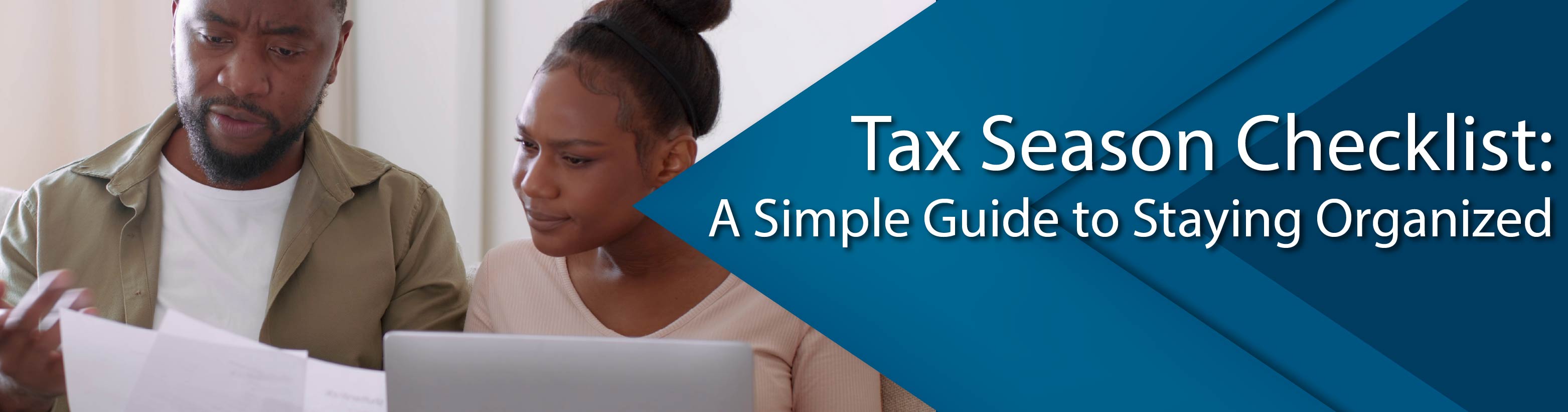
Tax season can feel overwhelming, but with the right preparation, it doesn’t have to be stressful. Staying organized and starting early can help you avoid mistakes, reduce anxiety, and potentially maximize your refund. Use this tax season checklist to make sure you are fully prepared.
1. Gather Personal Information
- Social Security numbers or Tax Identification Numbers for you, your spouse, and dependents
- Dates of birth for everyone listed on your return
- Your previous year’s tax return for reference
2. Collect Income Documents
Gather all documents that report income earned during the year. These may include:
- W-2 forms from employees
- 1099 forms for freelance, contract, or other non-employee income
- 1099-INT or 1099-DIV for interest and dividends
- 1099-R for retirement distributions
- Records of rental income or other miscellaneous income
3. Organize Expense Records
If you plan to itemize deductions or claim credits, collect documentation for eligible expenses, such as:
- Mortgage interest statements
- Property tax statements
- Charitable donation receipts
- Medical expense records
- Education expenses and tuition statements
4. Review Tax Credits and Deductions
Consider whether you qualify for common tax credits and deductions, including:
- Child Tax Credit
- Earned Income Tax Credit
- Education credits
- Retirement savings contributions credit
- Energy-efficient home improvement credits
5. Prepare Business or Self-Employment Records
If you are self-employed or own a small business, gather:
- Income and expense records
- Mileage logs
- Receipts for business-related purchases
- Home office expense documentation
- Quarterly estimated tax payment records
6. Verify Bank Information
If you are expecting a refund or plan to pay electronically, confirm your bank account and routing numbers to avoid processing delays.
7. Check Important Deadlines
Mark important tax deadlines on your calendar. Filing late can result in penalties and interest. If you need more time, consider filing for an extension before the due date.
8. Choose How You Will File
Decide whether you will:
- File your taxes using tax software
- Work with a certified tax professional
- Use free filing options if you qualify
9. Review Before Submitting
Before submitting your return, carefully review:
- Names and Social Security numbers
- Income amounts
- Deductions and credits claimed
- Bank account details
10. Keep Copies of Everything
After filing, keep copies of your tax return and all supporting documents in a secure location. These records may be needed for future reference or in case of an audit.
Final Thoughts
Tax season does not have to be complicated. By following this checklist and staying organized throughout the year, you can approach tax filing with confidence and peace of mind.
« Return to "Blog"


 open
open apply
apply submit
 calculate