

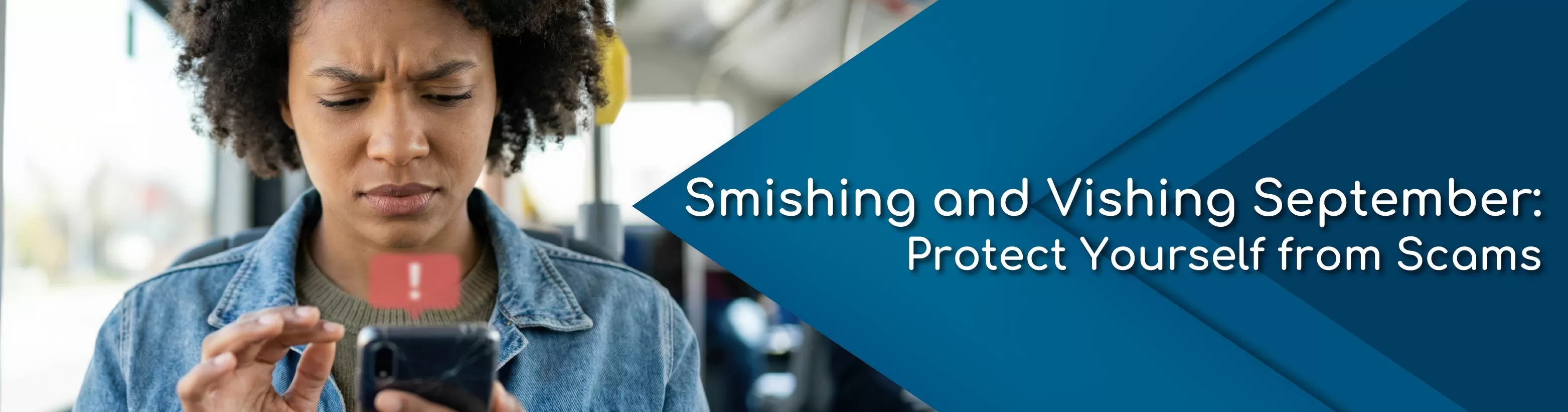
Your phone can do just about everything these days. You can check your bank account, pay a bill, send a message, shop online, and stay connected with friends and family—all from the palm of your hand. Unfortunately, scammers know this, too.
This September, KCCU is shining a light on two common types of scams that can target anyone: smishing and vishing. While the names may sound unusual, the goal is simple—scammers use texts and phone calls to trick you into sharing personal information, clicking a malicious link, or sending money.
Understanding how these scams work is one of the best ways to protect yourself and your finances.
What Is Smishing?
“Smishing” is a combination of SMS (the technology behind text messaging) and phishing. It happens when scammers send fraudulent text messages designed to make you take an action.
You might receive a text claiming to be from your financial institution, a delivery company, a government agency, or another organization you recognize. The message may say there is a problem with your account, an unusual transaction was detected, or a package requires your attention.
The message will often include a link and encourage you to click quickly.
For example, a scammer might send a message that says your account has been locked and asks you to click a link to verify your identity. The link may take you to a fake website designed to look legitimate. If you enter your username, password, debit card information, or other personal details, you could unknowingly hand them directly to the scammer.
What Is Vishing?
Vishing works in much the same way, except the scam happens through a voice call. The term combines “voice” and “phishing.”
A scammer may call pretending to be from your financial institution, a government agency, a technology company, or another trusted organization. They may claim there has been suspicious activity on your account or that you need to provide information to prevent a problem.
Some scammers use urgency or fear to pressure you into acting before you have time to think.
You may hear something like, “We detected fraudulent activity on your account. We need to verify your information immediately.”
The caller may ask for your account information, password, Social Security number, debit card information, or even a verification code sent to your phone.
Don’t let a sense of urgency override your instincts.
Red Flags to Watch For
Smishing and vishing scams can look and sound convincing, but there are warning signs to watch for.
Unexpected messages or calls: Be cautious if someone contacts you unexpectedly and asks for personal or financial information.
Urgency: Scammers often create a sense of panic. They may tell you that your account will be closed, a payment is overdue, or fraud is occurring unless you act immediately.
Requests for sensitive information: Be extremely cautious about anyone asking for passwords, PINs, full account numbers, or one-time verification codes.
Suspicious links: Don't click links in unexpected text messages. Instead, visit the organization's official website or use its verified app to contact them directly.
Caller ID isn't proof: Scammers can manipulate caller ID information to make a call appear to come from a legitimate business or phone number.
When in Doubt, Stop and Verify
One of the most effective ways to protect yourself is to slow down.
If you receive a suspicious text or call claiming to be from KCCU, don't respond to the message or provide information to the caller. Instead, contact KCCU directly using a trusted phone number from either our website, your account statement, or the number on the back of your debit or credit card, or you can reach us through another official method of communication such as email or chat from our website.
Remember: You don't have to make a decision immediately.
If someone is pressuring you to act right now, that's a reason to pause—not a reason to hurry.
KCCU will never want you to feel pressured into sharing sensitive information. If you're unsure whether a communication is legitimate, reach out to us before taking action and call 800.854.5421.
Protecting Your Information Protects Your Finances
Cybersecurity is an important part of financial wellness. At KCCU, we want our members to feel confident not only managing their money but also protecting it.
Using strong, unique passwords, enabling multifactor authentication when available, keeping your devices and apps updated, and regularly monitoring your accounts are all good habits. It's also important to review your account activity regularly and report anything that looks suspicious.
And remember, scammers don't discriminate. They can target people of all ages and backgrounds, and their tactics are constantly changing. Being cautious isn't about being afraid of every text message or phone call—it's about knowing what to look for and taking a moment to verify before you act.
Think Before You Click or Answer
This September, make “Stop. Think. Verify.” your personal cybersecurity motto.
Did you receive an unexpected text asking you to click a link? Stop.
Did someone call claiming to be from your financial institution and ask for sensitive information? Think.
Are you unsure whether the communication is legitimate? Verify it through a trusted source.
A few extra seconds could make a big difference.
At KCCU, we're committed to helping our members protect their financial well-being. If something doesn't seem right, don't be afraid to ask questions. Taking a cautious approach could help you avoid becoming the next target of a smishing or vishing scam.
This Smishing and Vishing September, remember: scammers want you to act quickly. Your best defense is to slow down, stay alert, and verify before you trust.
« Return to "Blog"


 open
open apply
apply submit
 calculate